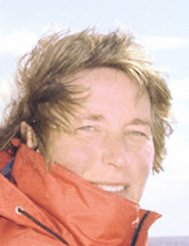
Swanica explores Japan

Tuesday, August 21, 2007

My son helped me with integrating this blogspot site and my website. So, I will stop using blogspot. Please, go to www.swanceramics.com

Wednesday, August 01, 2007

SWANICA LIGTENBERG
exhibits at the TOKO GALLERY, Mashiko, Japan


Special-Judge’s award winner of the 6th Mashiko Ceramics Competition 2006, Japan,

SWANICA LIGTENBERG

exhibits her HORSEHAIR CERAMIC ART show at the TOKO GALLERY in Mashiko

from September 8 – September 20, 2007.

The Opening Reception is on September 8, from 6 – 8pm.

FOR FRIENSHIP AND CERAMIC ARTS!

Address of Toko Gallery is: Jonaizaka 2, Mashiko-machi, Haga-gun, 321-4218, Tochigi-ken


スワニカ・リヒテンベルグ展覧会
益子・陶庫ギャラリーにて


2006年第6回益子陶芸展にて審査員特別賞受賞者

スワニカ・リヒテンベルグ

益子・陶庫ギャラリーにて『ホースヘアー陶芸展』

2007年9月8日~9月20日

レセプション9月8日午後6時~8時(益子陶芸倶楽部にてパーティーあり)


陶庫ギャラリー :〒3214218 栃木県栃木県芳賀郡益子町城内坂2

swanica@ligtenberg.com; www.swanceramics.com

Some pieces for the upcoming show in September.


Cosmos Horsehair Plate
17,5"/44cm x H4"/9cm,


Diamond Horsehair Vase
9" x H9"


Mandala Horsehair Plate
15"/38cm x H2"/5cm


Pod Horsehair Vase
11" x H15"


Shiratori Horsehair Vase
11" x H21"
I am finally back to continue my lifestory.

I had a good 2 weeks in Holland and saw my family, especially my middle son, Maarten, who turned 22 years old. We went sailing that day and had real Dutch weather: heavy clouds, rain, wind, thunder, and luckily also some sun.

Then to America, San Diego, to see my oldest son, Roland, to celebrate the 4th of July, National Holiday. And a couple of days later, back home to Los Altos where my youngest son, Arjan, was vacationing for a little bit. He is now in Europe preparing with the US Junior National Water Polo team for the World Championships this August in Los Angeles.
The team became #6. They never had been that high. My guy is the tallest one in the picture. Congratulations to the US team!


I started working right away when I came home and with my husband, Adriaan, we made some special devices.


We made this pully, so, I can lower the can over the hot plate, so it won't cool off too fast and will perhaps not crack!


Another pully is attached to the lid of the electric kiln.
It is especially handy, it makes it easier and lighter to open the kiln. You can open it up half way to have less heat loss and it will stay in that position without falling back.


This is the wire with two bars in between which can slide. The length of the wire is about 6 feet or 2 meters.


We are preparing the wire so not to waste any time when we open the kiln for heat loss. The kiln is between 1100-1300 Fahrenheit or 600-700 Celsius degrees. The horsehair will still burn nicely. You get an array of colors spraying the ferric chloride. And of course less thermal shock.


Then we open the kiln and lower the wire and put around the plate with the bars going on each side underneath the plate.


You put the two loops together and are able to lift the plate out of the kiln.


I put the plate on a wheel covered with refractory bricks.


Then I lower the can over the plate and hope for the best not to hear a crack sound.
I had some big losses. That goes with this kind of risky work.

You want to minimize the thermal shock: the stress when its surfaces are exposed to contrasting temperatures at the same time, which can mean cracking as a result of rapid temperature change. Ceramic objects are particularly vulnerable to this form of failure, due to their low toughness, low thermal conductivity, and high thermal expansion coefficients. If you would like to read more about it, go to: http://en.wikipedia.org/wiki/Thermal_shock.


Lowering the can all the way.


Then spraying with ferric chloride. I want to glaze this plate, so, I don't put on any horsehair at this point. Glaze will not stick on the horsehair. But I want brown color underneath the glaze, because only spraying on the glaze doesn't give enough color. It will give a beautiful iridescent sheen.


I lower the can again and may repeat this several times.


This all happens really fast, because otherwise the plate cools too fast to work with it anymore.


A last touch up.


I wear a mask for the dangerous fumes of the ferric chloride. My arms are covered with old socks. Of course, you can wear a long sleeved shirt. We wear big gloves for the heat and underneath I wear this plastic glove to be able to start working right away with the ferric chloride and not to get it on my hands. The bottle will leak. We also put a fan nearby to blow away the fumes when I spray.


This is the final result:

Sun Horsehair Plate.
17,5"/44cm x 2,5"/6cm


(Click on image)

Monday, June 18, 2007


In 8 hours a taxi will take me to the Kamakura train station for my trip to Holland for 2 weeks and then for 3 weeks to America.

This is partly the result of being able to work here at home in Japan for a couple of weeks and in Sato-san's workshop. I still have 2 glaze/horsehair firings and 1 bisque/horsehair firing left.

A nice start for my show in Mashiko in September.


The pond at the Hachimangu Shrine looks magnificent and wonderful with those big water Lily plants.

Do you see the coy fish and the turtle?


Unfortunately, they don't have flowers yet and tomorrow I leave for Holland and America. So, flower pictures have to wait until next year.


Completely filled up with the leaves and beautiful green color.

Saturday, June 09, 2007


Last year, I went to this national historic site: the Meigetsu-in. This temple is especially known because of the Hydrangea flowers. But then I was too late and they had already trimmed all the flowers.
Now I was here in Kamakura and it is an overwhelming sea of Hydrangeas: so beautiful!
How powerful a flower can be!


The Hydrangea is a symbol of expressing love, gratitude, and enlightenment. It is said that the observer can easily get lost in it's abundance of beautiful petals, and thus gets lost in one's own thoughts – propitiating higher thought and reaching enlightenment. Due to it's versatility, and beauty, the hydrangea makes an excellent thank you gift.


The main stairs toward the temple.


More Hydrangreas along some other stairs.


The Meigetsu-in was founded in the year 1160 as a burial place. In 1256, this site was chosen for the construction of a Buddhist temple, which, through the centuries, endured some changes, but belongs now to the Kenchoji Branch of the the Rinzai Zen Sect.


The rock garden of the temple with stil the blooming Azaleas. The garden expresses the Buddhist view of the world.


Then, you can have a look through the temple to the back garden filled with Irisses.


This is a view from the other side. And you can look through the circle of the temple room at the rock garden.
Again, what a beautiful garden. We had a nice stroll in between the Irisses.

In Greek mythology, Iris is the messenger of the gods who, cloaked in a robe of dewdrops reflecting the stars, communicates messages via the rainbow, the bridge between heaven and earth. Thus iris is the symbol of communication and the name itself means "rainbow".

Friday, June 08, 2007

My husband got me information about this amazing little museum in Kamakura. We live now for a year in Kamakura and you think you have seen it all, but there are still so many things to discover in this historic town.

This museum is a refined, elegant Japanese-style house which is in a quiet, residential area. It was the house of Kaburaki Kiyokata, a great painter of the modern Nihonga, Japanese-style painting.


First, he was an illustrator, but later turned to painting in the Japanese style and created many works focusing on graceful young women, and the lively life of the common people in town.


A woman in the snow.


A woman with a drum.


In 1946, he came to Kamakura. He spent the rest of his life here until his death at the age of 93 in 1972.


A woman with a fish in a bowl.

In 1994, his bereaved family donated his artworks, and his residence and land to Kamakura City for other people to enjoy his beautiful artwork. Thus in April 1998 the memorial museum opened.


A woman with a flower.

Thursday, June 07, 2007


I want to show you the new workspace at my house.
This is the view through the door from our diningroom. The cloths are drying in the seawind.
In the room we only have a table, some chairs and the printer. And sometimes, we eat here.


I can do a lot of preparation and hand work (no wheel). Then, I bring my work to Sato-san for firing on my bicycle or yesterday, with the taxi (my bike had a flat tire). But greenware, dried clay, is very breakable, so I had some little casualties.

I work at this table and have a beautiful view at the sea and hear the waves all the time mixed in with the sounds of traffic.


Another view at the sea when I sit at the table.


The room slowly gets filled up.
Is there still space for a wheel?

Wednesday, June 06, 2007


We went to a Signature Dinner from Euan Craig at Toyado Restaurant in Nihombashi in Tokyo.
At the same time, he had a ceramics exhibition at the Ebiya antique store across the street.

The chef specially prepared a menu to go with Euan's dinnerware and Euan designed his ware to go with this food. A nice collaboration.

This is Euan's show and dinner invitation.


Euan.


I can't quite remember which dish came first and the first couple of dishes I forgot to photograph, but the dishes were beautiful and the food was marvelous.


The main dish with the pot as plate upside down.


He fires his ware only one time in an wood/soda kiln. The lines on his dishes are a kind of rice stalks.

If you want to know more about Euan, look on his website: http://www.d1.dion.ne.jp/~euan/
and on some former blogs of 7/11/06, when I had my visiting workshop in Mashiko and 2/26/07, when Euan gave a workshop in Mashiko.


Here, he turned the dish back up and used it as Soba dish; a Japanese noodle.


The desert in a triangle cut thrown dish.